Google can keep a 4xx page in the index but drops its snippet
Summary
Google kept VLC's home page in search results while the site served a 418 error, but stripped the snippet and favicon and left a stale title.
When a URL loses its snippet or favicon while its ranking holds, check the status code Googlebot gets before looking for any other cause.
Gary Illyes, an analyst on Google’s Search Relations team, said Search can “temporarily protect the URL from falling out of the index right away” when an important page starts serving a 4xx status code, in a LinkedIn comment reported by Search Engine Roundtable on November 5. He was answering SEOs who had noticed that VLC’s home page was still ranking while its favicon had vanished from the result.
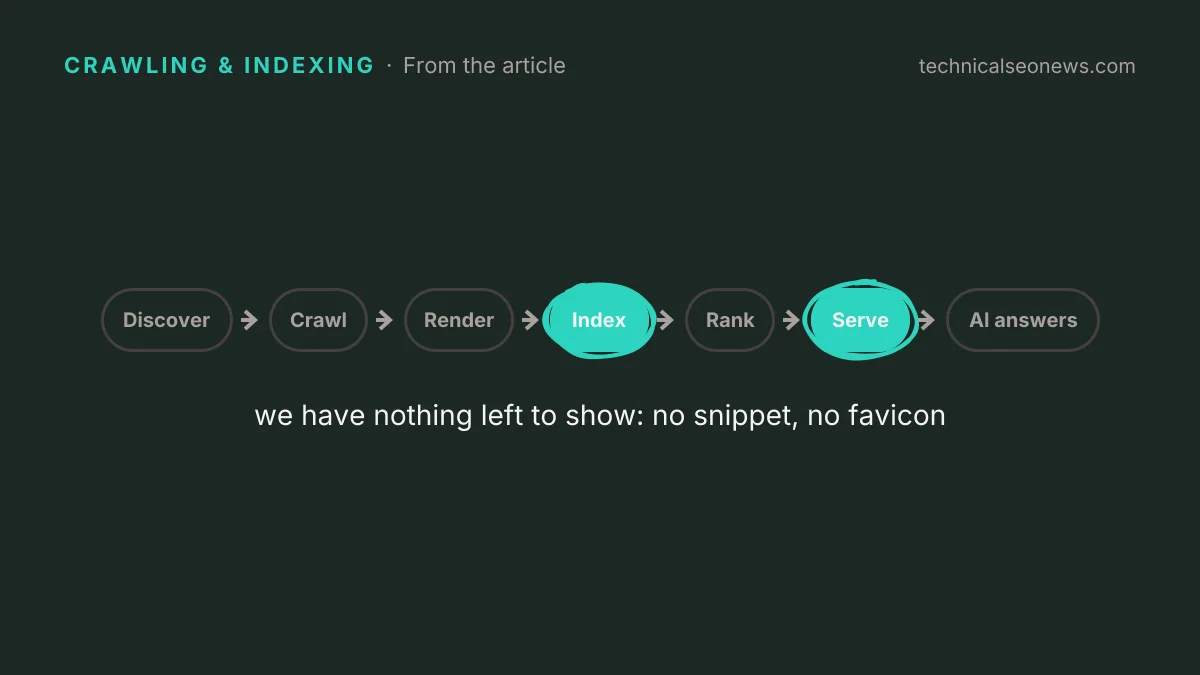
The cause was a status code with no place in normal serving. VLC’s site was returning 418, the “I’m a teapot” code, and Illyes wrote that Google treats it the way it treats most other 4xx errors, as “basically ‘not found.’” Holding the URL in the index did not hold the rest of the listing together. With the page no longer readable, Illyes wrote, “we have nothing left to show: no snippet, no favicon,” leaving the link and “the last good title we had.”
The search result kept working after the page stopped. The home page was still showing second for a search for the site, below the download page, in the result captured by Barry Schwartz, who runs Search Engine Roundtable. A rank tracker watching that query would have recorded a healthy position all the way through. The likelier effect was fewer clicks rather than any visible ranking drop, since a listing with no description and a stale title is a weaker result than it was the week before. That is the same blind spot as when Google swaps the ranking URL while the position holds: the number in the tracker is real and tells you nothing about the state of the page behind it.
Reading the protection as a general safety net is the mistake to avoid. Illyes tied it to VLC specifically, calling it “arguably one of the most important pages on the internet,” and described the effect as temporary. Schwartz raised a second possibility in the same write-up, that Google may keep showing the URL partly because the query names the site. Either way, the safer assumption for an ordinary site is that a 4xx starts the normal path out of the index, and that nothing in Search will flag the problem on the way.
Recovery is already underway for VLC, which is serving 200 OK with content again. Illyes said it “should sort itself out soon” and gave no timeline. Because the listing lost its snippet when Google could no longer read the page, the better expectation is that the snippet and favicon return on the next successful fetch, not at the moment the fix deploys.
Favicon loss on its own is worth taking seriously as a serving symptom. Schwartz added that Search Engine Roundtable’s own favicon disappeared for a few days in late October with no changes on his side beforehand, and he suspected a temporary PHP exploit issue rather than anything to do with the site’s content.
What to do
Treat the missing snippet as the alert you did not get from your rankings.
- Check the status code first when a URL loses its snippet or favicon but keeps its position. Run a live fetch in URL Inspection before looking for a content, branding or markup cause.
- Alert on status codes for your most important URLs, not on rankings or impressions. On a protected URL the position may not move for a while, which removes the signal most teams watch.
- Confirm what Googlebot receives rather than what your browser receives. VLC’s 418 came from its own serving, and edge rules, WAFs and bot-management settings can return a non-200 to crawlers only.
- Expect the listing to stay stripped after the fix ships, until Google crawls the page again.
- Do not plan around index protection. It is discretionary, Illyes called it temporary, and he gave no indication of what qualifies a URL for it.