ChatGPT clicks now land as direct traffic after OpenAI drops UTM
Summary
ChatGPT referral traffic has been landing in the direct bucket since the GPT-6 release stopped tagging outbound links and stopped passing a referrer. Nothing in analytics can recover either signal, so the drop in the ChatGPT channel is a labelling change, not lost demand.
Any AI-traffic report built on utm_source broke silently this month. Annotate the break date and start a new baseline there, identify the cohort by first-visit behaviour and deep-page direct landings, and keep server-log bot hits as the separate supply-side measure.
OpenAI stopped putting ?utm_source=chatgpt.com on the links in ChatGPT’s answers, and Search Engine Roundtable reports the change arrived with the GPT-6 release about a week before its October 14 post. Cedric Huesler of Adobe, who measured the break across roughly 500 pages, posted on LinkedIn that GPT-6 opens links with window.open(url, "_blank", "noopener,noreferrer") and sends no parameter. The noreferrer part strips the Referer header too, so there is no tag and no referrer, and analytics files the visit under direct. OpenAI had only added the UTM tracking in June.
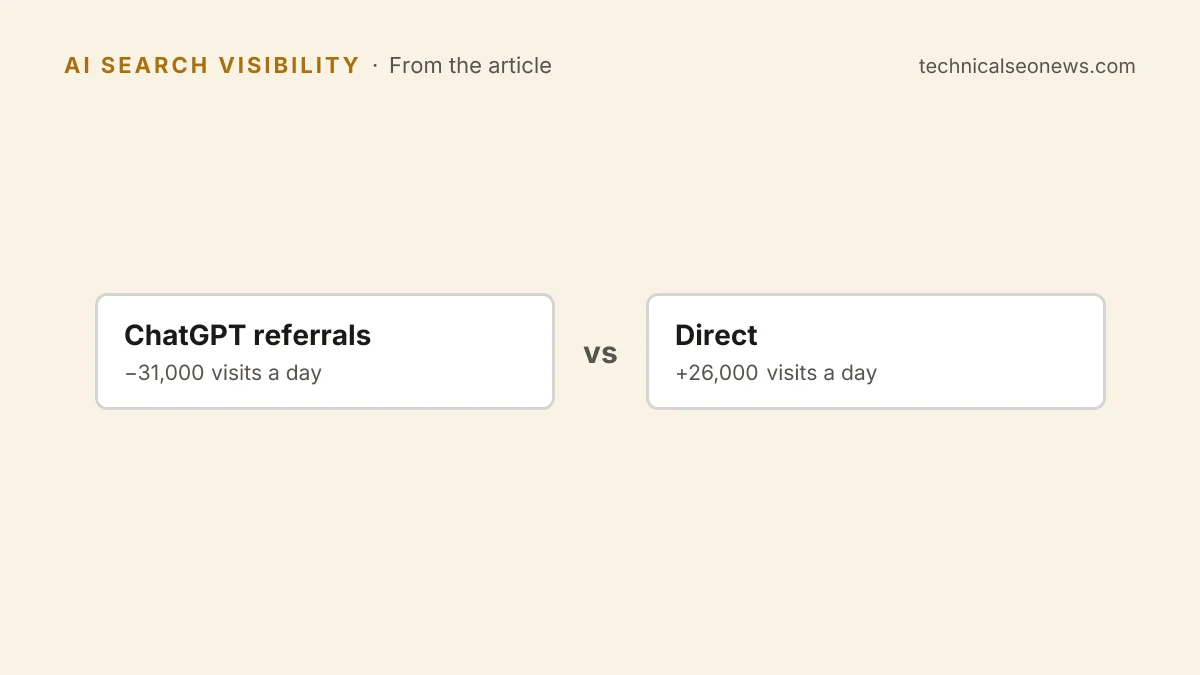
Huesler compared October 9 to 13 with the week before. The pages in his set were ones where ChatGPT drove at least 5 percent of visits.
| Channel on those pages | Change |
|---|---|
| ChatGPT referrals | −31,000 visits a day |
| Direct | +26,000 visits a day |
| Search | −7% |
Search fell by the same amount it fell everywhere else that week, which leaves the direct rise as the thing needing an explanation. Direct went up on two in three of the pages that lost ChatGPT traffic, and in the previous week that had been a coin flip. The new direct visitors also behave like ChatGPT visitors: on mobile, the share who were new to the site and saw the consent banner went from 36 percent to 44 percent. For visitors still identified as coming from ChatGPT, that figure is 55 percent.
The traffic did not go anywhere, in other words, and the label did. Direct is a bucket that also holds bookmarks, app opens and pasted URLs, so crediting the whole rise to ChatGPT will overstate it, and that is the one caveat to carry into a client report. Huesler’s numbers come from one set of pages, so the size of the swap will differ by site. The mechanism will not.
The bot side of the same week looks unsettled. Per the SE Roundtable post, Sébastien Billard, a French SEO consultant, replied on X that he has seen a sharp drop in ChatGPT human traffic since October 9 alongside a drop in ChatGPT-User robot traffic, with OAI-SearchBot hits rising from around October 7. Those two bots do different jobs: ChatGPT-User fetches a page in real time because a prompt needs it, while OAI-SearchBot crawls to feed ChatGPT’s search index. If that shift holds, log-based AI reporting moves at the same time as the referral reporting, so one cannot be used to calibrate the other across early October.
Google went the opposite way and now tags Gemini links so its referrals leave the direct bucket. Any dashboard that ranks assistants against each other by referral volume is now comparing a tagged source with an untagged one, and ChatGPT will look like it collapsed.
What to do
A client-side fix is not available. Because noreferrer is set, document.referrer is empty in the browser, so no tag manager rule or landing-page script can recover the origin.
- Annotate October 9 in analytics and stop reading ChatGPT referral trends across that date. Treat the drop as a measurement change and start a new baseline, not a demand change.
- Rebuild the cohort from behaviour rather than the parameter: new visitors arriving direct on deep article or product URLs rather than the homepage, in sessions that trip first-visit markers like the consent banner. That is the same test Huesler used, and it identifies a group, not individual sessions.
- Keep OAI-SearchBot and ChatGPT-User hits in log reporting as the supply-side number, and label it as retrieval rather than clicks. A page being fetched says ChatGPT read it, not that anyone followed a link.
- Move the headline AI metric downstream where attribution survives, the way Ahrefs attributes signups rather than sessions. Self-reported source fields on forms and trials keep working when the channel label does not.
- Tell stakeholders before they open the dashboard. An unexplained hole in an AI channel invites the wrong decision about content that is still being cited and clicked.
Watch for the parameter coming back. Search Engine Roundtable says it is not sure the removal was intentional, so the tag could return in a point release and put a second break in the same series. Keep the October 9 annotation in place either way.