ChatGPT usually links brands without naming them in the answer
Summary
ChatGPT usually cites a brand's page as a source without naming the brand, Gemini does the reverse, and a single AI visibility score that averages the two hides which outcome a brand actually has.
Report citation rate and mention rate as two separate numbers for each engine.
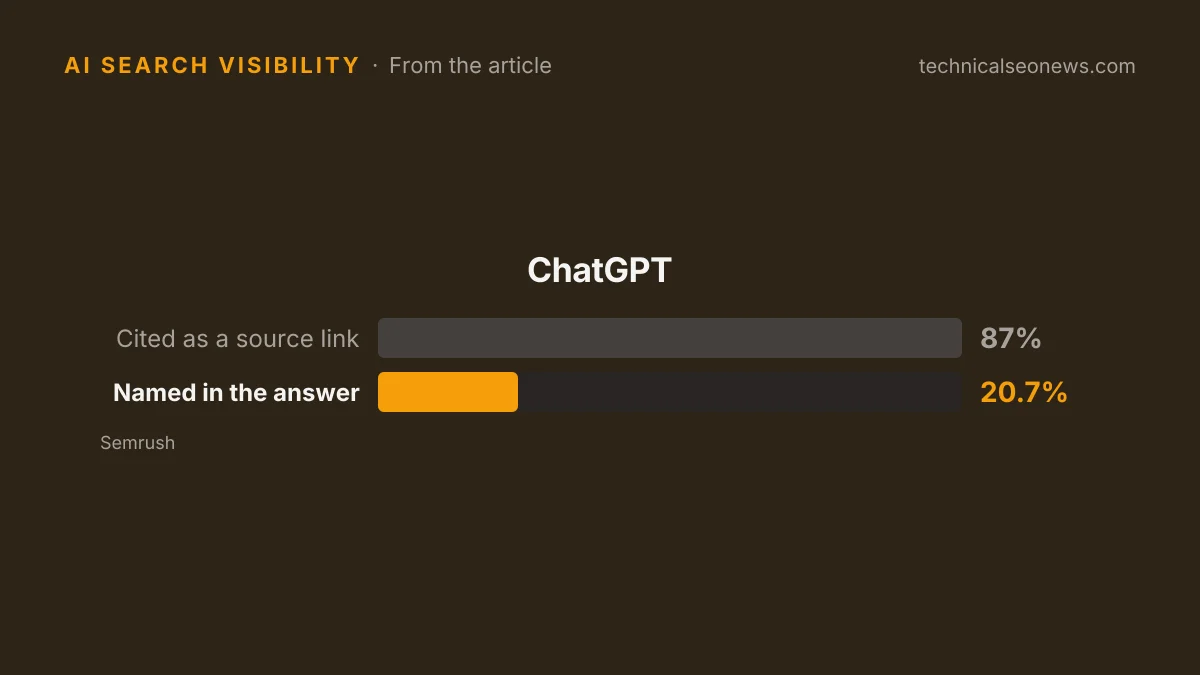
Semrush’s AI search strategy guide, published October 23, reports that ChatGPT cited brands as a source link in 87% of their appearances in AI answers and named them in the answer text in only 20.7%. The split comes from Semrush’s own study of brand appearances across ChatGPT, Google AI Overviews, Gemini and Google AI Mode.
Semrush’s ghost citations study, published in June, logged 3,981 brand appearances across those four engines and 14 countries. 62% of them were source links in answers that never used the brand’s name. Gemini behaved the other way around.
| Platform | Cited as a source link | Named in the answer |
|---|---|---|
| ChatGPT | 87% | 20.7% |
| Gemini | 21.4% | 83.7% |
Google’s AI Overviews and AI Mode sat between the two, with AI Mode naming brands at nearly twice ChatGPT’s rate. One platform hands out links and withholds the name. The other says the name and withholds the link.
A single AI visibility percentage averages those two behaviours. Semrush’s guide does not put it this way, but a score that counts citations and mentions together will move whenever the platform mix in a sample shifts, with nothing about the brand having changed. A tool weighted toward ChatGPT calls a brand visible on the strength of links its answers never attribute. A tool weighted toward Gemini calls the same brand visible on the strength of names with no link to click.
The guide separates three outcomes that one number collapses:
- Citation: a page was used as a source link.
- Mention: the brand name appeared in the answer text.
- Recommendation: the brand was presented as an option worth choosing.
Those are three different commercial results, and a report that adds them together cannot say which one a brand actually has. Tool scores that stand in for the thing they claim to measure are a recurring problem in AI visibility reporting. Readiness checkers already score whether schema exists rather than what crawlers receive.
Naming rates also varied by country, from 18% to 50% in the study, so one global average flatters some markets and understates others. Semrush’s guide adds that one prompt, one run or one platform gives only a partial view, the same sampling gap that a Chinese ad-industry standard answered by requiring 30 runs per prompt.
A brand cited without a mention has already cleared retrieval, the step that depends on crawler access, indexing and the page itself. What is missing is attribution inside the answer. Semrush’s study says clearer brand references, product mentions or comparison sections on those pages can help close that gap.
What to do
- Ask any AI visibility tool which outcome its score counts: a source link, a brand name in the answer, or a recommendation. If it will not say, the number is not reportable.
- Report citation rate and mention rate as separate figures, per engine. Semrush’s guide says no single visibility metric is enough, and the ChatGPT and Gemini rows above show why.
- Filter for pages that get cited without a mention and treat those as the shortlist, since retrieval is already working on them.
- Set naming targets per country if you track more than one market.
- Run each tracked prompt several times before calling a result a pattern.