Semrush's Claude connector reads audits but cannot start a crawl
Summary
Semrush's Claude connector reads a finished Site Audit but cannot start one, so the crawl still has to be scheduled in the dashboard.
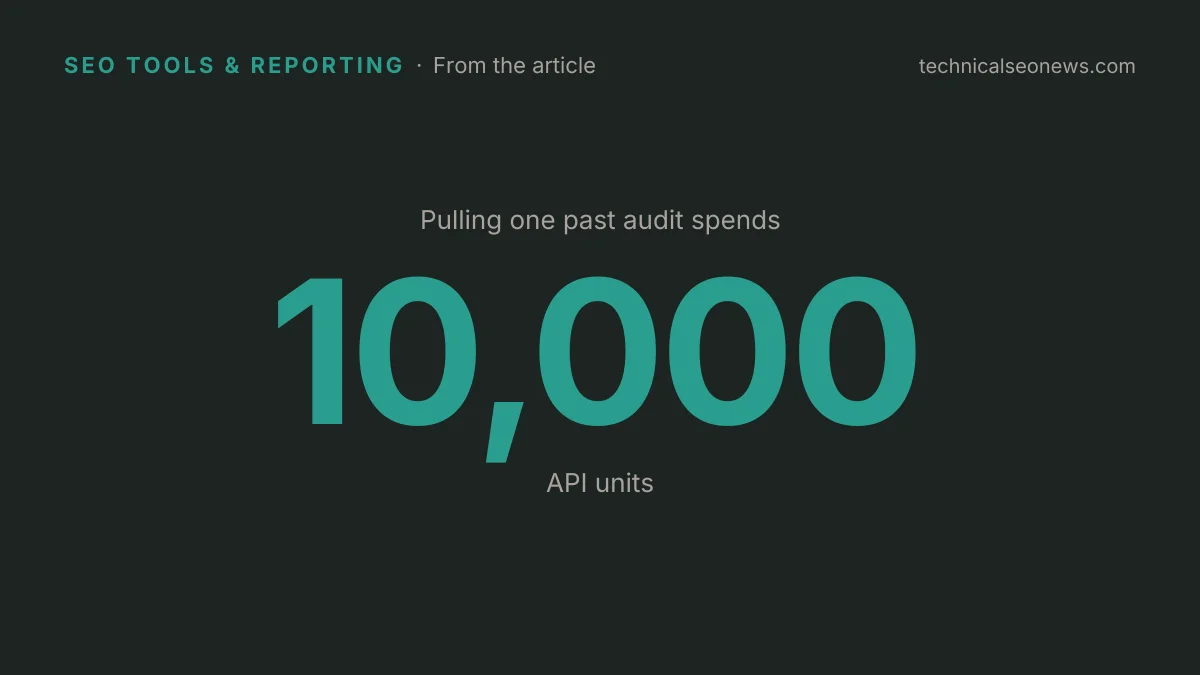
Pull past audits only for a specific trend question, since each one spends 10,000 of a plan's 50,000 API units.
Semrush’s walkthrough for auditing a site with Claude, published on October 15, wires its MCP server into Claude so the assistant can read Site Audit findings and hand back a prioritized fix list. The connector retrieves data only from audits that have already finished. Starting a new audit or changing audit settings still happens in the Semrush dashboard.
The read-only limit rules out the loop an agent workflow would otherwise want: spot a problem, re-crawl the site, and check whether the fix took. What the connector supports is a reporting pass over a crawl somebody scheduled by hand. Semrush’s post points to the “Last Update” column on the Site Audit project page as the place to check how fresh the data is, and says to re-run the campaign manually when a newer audit is needed. Narrow permissions look like the pattern for these connectors; WordPress’s official agent plugin limits agents to the actions its plugins declare.
Cost is the second limit. Pulling one past audit spends 10,000 API units, while most other Site Audit requests spend between 100 and 1,000.
| Request | API units |
|---|---|
| One past audit | 10,000 |
| Most other Site Audit requests | 100 to 1,000 |
| Included with a qualifying plan | 50,000 per renewal cycle |
Semrush’s post gives the per-request figures but not the total: five historical pulls spend an entire cycle’s allowance. A standing report that compares several past audits therefore runs only a few times before renewal. Units reset when the subscription renews, so a trend report that runs out mid-cycle waits.
The higher tiers are the ones that need an extra purchase. Site Audit and MCP access are included with Semrush One Starter and Pro+ and with SEO Classic Pro and Guru. Semrush One Advanced and SEO Classic Business need an added API units package before the connector has anything to spend.
Within those limits the connector works as a query layer over the issue list. Claude can pull issues with Site Audit’s severity labels (errors, warnings, notices), the URLs affected by each issue, every issue found on a single page, and Site Health scores across the latest two audits. Site Audit’s checks include llms.txt formatting problems, which puts a file PageSpeed Insights also audits within reach of plain-language questions.
What to do
- Schedule the crawl, then open the chat. Re-run the Site Audit campaign when the “Last Update” date predates the change being checked, and confirm the run finished before asking Claude anything.
- Keep prompts on the latest audit. Summaries, per-issue explanations and page-level lookups sit in the 100 to 1,000 unit band, and the 10,000-unit historical pull earns its keep only for a trend question that cannot be answered another way.
- Price a recurring report before building it. Remaining units live in the API Units tab of the subscription page and past spend in the API query log, so multiply the cost of one run by how often it will run.
- Check the plan first. One Advanced and SEO Classic Business need the API units package bought separately, and without it the connector has no budget to draw on.