ChatGPT searches brand sites directly and cites Reddit far less
Summary
ChatGPT's free default rarely searches at all, and when it does it increasingly goes looking inside the site that owns the fact rather than at coverage of it. Aggregator citations are collapsing in parallel.
So the pricing, specs and support answers worth being cited for need to sit in plain crawlable text on your own pages, and OpenAI's retrieval bots need to be able to reach them.
Ahrefs, the SEO tool company, logged the 15 million fan-out queries behind 66.6 million free, logged-out ChatGPT responses from August and September. Of those queries, 6.8% used a site: operator to search a single domain. Among the roughly 160 most-searched sites, Ahrefs’ study puts 75.9% of those searches on brand sites, meaning company domains like apple.com or ikea.com rather than retailers, forums, government sites or review sites. Apple’s own domain drew the most, about 9,400 searches in the sample, with ikea.com and nike.com behind it.
Fan-out queries are the searches a model runs behind one answer, and they happen less often than the industry’s attention to them suggests. Only 14.4% of the responses triggered a web search at all, and those ran about 1.6 queries each. For the other six prompts in seven, whether a brand appears depends on what the model already carries from training rather than on anything it goes and fetches.
When ChatGPT did search, the wording of those queries moved toward official, first-hand facts across the two months.
| Word | August | September |
|---|---|---|
| 2026 | 17.6% | 22.9% |
| official | 10.1% | 13.1% |
| price | 6.0% | 8.9% |
| reviews | 2.7% | 3.6% |
“Price” rose by nearly half in relative terms in a single month and “reviews” grew by a third, which is product-sheet territory rather than editorial coverage. “2026” was the most common word of all, so recency is being asked for in the query itself.
The counterpart is a collapse in citations to sites that summarize other people’s information. Ahrefs’ separate citation data tracks how often each site appears in ChatGPT answers.
| Site | March | Late September |
|---|---|---|
| about 1 answer in 5 | about 1 in 43 | |
| Wikipedia | about 1 answer in 7 | about 1 in 35 |
For Reddit that is an 88% fall in six months.
Ahrefs reads this as ChatGPT shifting from sites that summarize information to the ones that produce it, and recommends building the pages only you can publish, such as product facts or original research. The mechanical version of that advice is the more useful one: a site: fan-out can only return what a page actually says in its text. Ahrefs’ post does not get into rendering, but a price that lives only inside a JavaScript pricing widget, a spec table shipped as a PDF, or a returns policy sitting behind a contact form gives the retrieval step nothing to pull.
The 6.8% figure is a floor for the free tier, not a rate for ChatGPT as a whole. Ahrefs compares it against other studies, which reported site: usage anywhere from 23% to 76% of fan-outs. Ahrefs puts the gap down to prompt mix, since several of those studies used commercial “best X” prompts that naturally trigger brand lookups, and notes that free, logged-out sessions search less than paid or reasoning models. That squares with the earlier finding that the default model and Thinking cite different kinds of sources. The likelier reading is that commercial prompts in paid sessions reach a named domain more often, not less.
What to do
- Get the facts being searched for into plain HTML text on your own pages: current pricing, specs, compatibility, stock and returns, and the support questions people actually ask.
- Where a fact is time-bound, such as a current price or this year’s model, say the year in the visible copy and not only in metadata, since “2026” led the fan-out vocabulary.
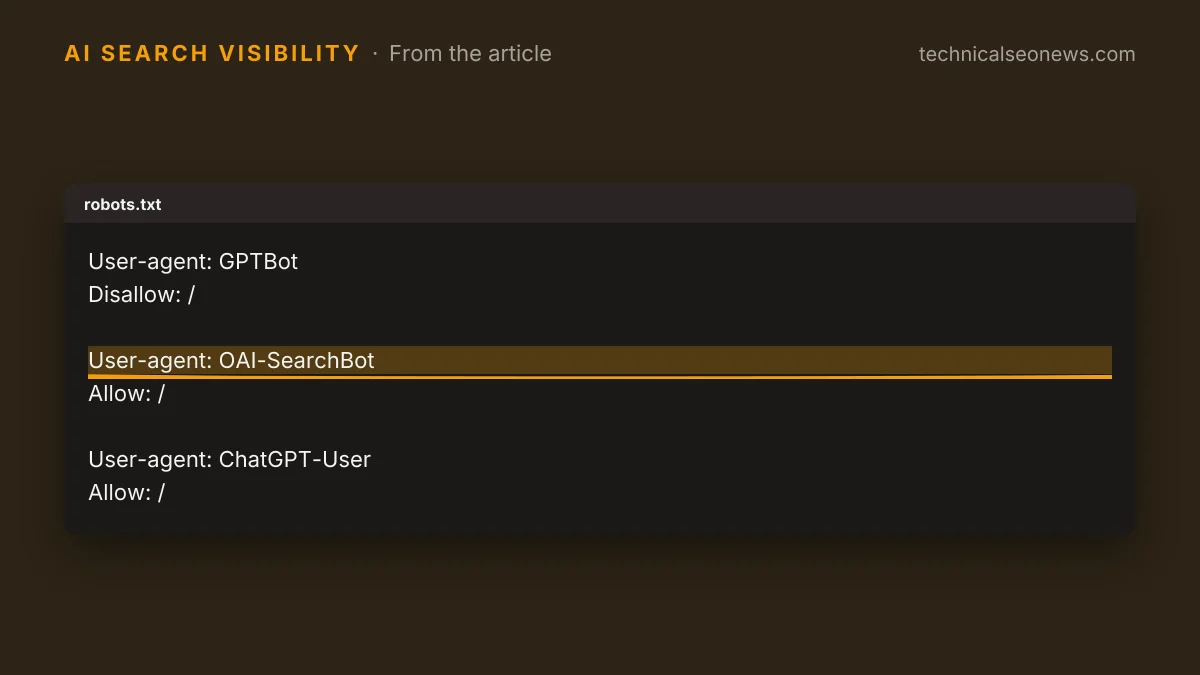
- Keep OpenAI’s retrieval bots allowed in robots.txt even if you block training. These fan-outs are retrieval, so
OAI-SearchBotand the on-request fetcherChatGPT-Userdecide whether your pages can answer, whileGPTBotonly feeds training:
User-agent: GPTBot
Disallow: /

User-agent: OAI-SearchBot
Allow: /

User-agent: ChatGPT-User
Allow: /- Check your own coverage by running
site:yourdomain.com pricingand the equivalent for reviews, specs and support, then reading what comes back the way a model would. Ahrefs’ post does not say which index serves ChatGPT’s fan-outs, so treat search engine results as a proxy. - Expect the payoff to be invisible in analytics. This kind of retrieval produces citations, not sessions, which is why attribution has to come from signup-side questions.