Bing Copilot test shrinks citation links to superscripts
Summary
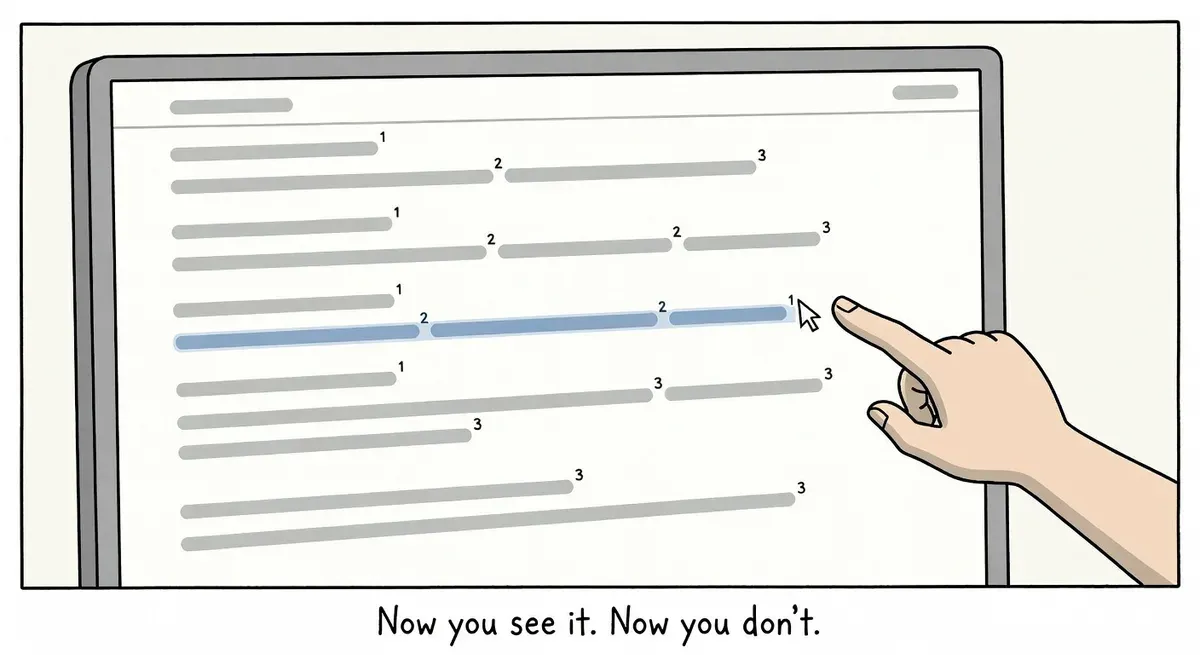
Bing is testing smaller superscript citation links in Copilot Search instead of full-line clickable text, reducing visibility and potential clicks to source pages. Smaller citations likely cut through traffic even when sites remain cited, mirroring Google's AI Overview design pattern. Establish your Bing referral baseline now and track Copilot citations separately to measure impact if the design rolls out.
What happened
Microsoft Bing is testing a new citation design in Copilot Search results that makes links far less prominent. Instead of the entire line of text being clickable to the source, only a small superscript citation mark at the end of the line links out.
The test was spotted by Sachin Patel on X and covered by Search Engine Roundtable’s Barry Schwartz, who noted he could not replicate the behavior. Patel wrote: “Bing is testing a new design for links in their AI overview. Previously, the link covered the entire line, but now it appears differently.”
The change has not rolled out broadly. It appears to be a limited A/B test.
Why it matters
Citation link size directly affects click-through rates. A full line of clickable text is a much larger target than a tiny superscript number. If Bing ships this design, sites that receive referral traffic from Copilot Search could see clicks drop even when they are still cited as a source.
The pattern mirrors a broader trend across AI search interfaces. Google’s AI Overviews already use small superscript citations rather than full-line links. If Bing follows suit, the design convention across both major search engines would push users toward consuming the AI-generated answer without clicking through.
For publishers, the implication is clear: being cited in an AI answer becomes less valuable if the citation is visually de-emphasized. Visibility in the answer itself still matters for brand awareness, but the direct traffic payoff shrinks.
What to do
No immediate action is required since the test is not widely available. But there are a few things worth preparing for.
Check your Bing referral traffic baseline now. Use Bing Webmaster Tools and your analytics platform to establish current Copilot-related click volumes. If the design rolls out, you will need a clean before-and-after comparison.
Segment Bing traffic by query type. Informational queries answered directly in Copilot are most at risk for click loss. Transactional and navigational queries tend to retain clicks regardless of citation design.
Track Bing Copilot citations separately. If you are already monitoring AI Overview citations from Google, apply the same tracking to Bing. Knowing you are cited but losing clicks tells a different story than losing citations entirely.
Watch for a broader rollout announcement. Barry Schwartz noted he hopes the interface does not roll out. If it does, expect coverage on Search Engine Roundtable and similar outlets.
Watch out for
Misattributing traffic drops. If this test reaches your users before a wider rollout is announced, you might see Bing referral dips that look like a ranking loss. Check whether your Copilot citations are stable before assuming a visibility problem.
Ignoring Bing Copilot entirely. Bing’s search market share is small, but Copilot is integrated into Edge, Windows, and Microsoft 365. The surface area for Copilot answers is larger than Bing.com’s market share suggests.