Merchant Center feeds now power organic and AI surfaces
Summary
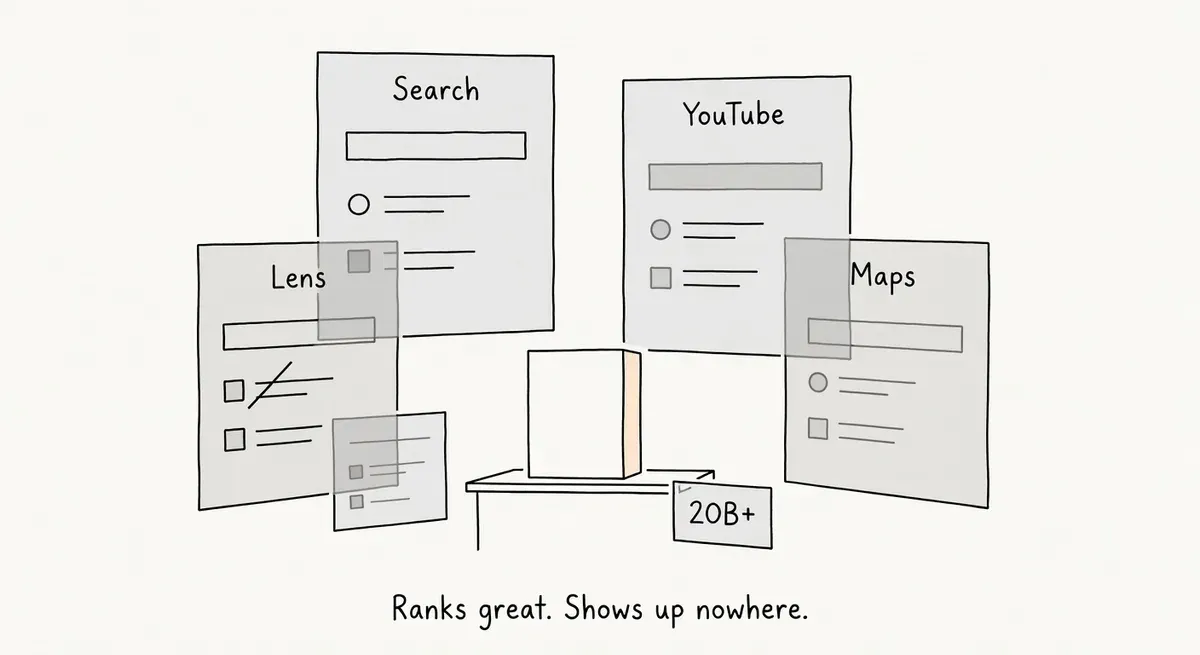
Google now uses Merchant Center feeds for organic results, AI Overviews, YouTube, Lens, and Maps, not just Shopping ads. Feed quality directly affects SEO outcomes and product discoverability across surfaces.
This means feed management is no longer a PPC-only concern. SEO teams need visibility into feed attributes like images, ratings, availability, and shipping details to avoid leaving organic visibility on the table.
Audit your feed for completeness and coordinate between SEO, paid media, and merchandising teams so product data aligns across Merchant Center and on-page schema markup.
What happened
Google is reframing Merchant Center product feeds as the foundation for product discovery across its entire platform, not just Shopping ads. Search Engine Journal reported on the shift, citing a recent Google Ads Decoded podcast episode where Nadja Bissinger, General Product Manager of Retail on YouTube, described Merchant Center feeds as the “backbone that powers organic and ads experiences.”
Bissinger urged merchants to submit the most detailed product data possible to increase discoverability. The podcast discussed product data in connection with free listings, AI-powered search experiences, YouTube formats, Google Lens, virtual try-on, and newer e-commerce surfaces still in development.
Google shared supporting numbers. People shop across Google more than 1 billion times per day, according to a 2025 retail insights piece cited in the SEJ article. Google Lens now processes more than 20 billion visual searches per month, and 1 in 4 of those searches carry commercial intent.
Google’s own Retail landing page reflects the same positioning. Merchant Center is presented as a single entry point for surfacing products across Search, Maps, YouTube, Google Shopping, and Google Images.
Why it matters
For years, product feed work lived inside paid media teams. If you ran Shopping ads, your feed got attention. If you didn’t, it was an afterthought. Google is now signaling that feed data influences where and how products appear in organic results, AI Overviews, YouTube, Lens, and Maps.
The practical implication is that feed quality now affects SEO outcomes. Structured product data from Merchant Center can determine whether a product shows up in free listings, visual search results, or AI-generated shopping experiences. Retailers who treat feed management as a PPC-only task are leaving organic visibility on the table.
The shift also matters for how teams are organized. SEJ’s coverage notes that larger organizations may need closer coordination between paid media, SEO, e-commerce, merchandising, and product teams. Feed attributes like images, ratings, promotions, availability, and shipping details all feed into how Google matches products to user intent across surfaces.
Google has financial motivation here too. More structured product data means more surfaces where Google can insert commerce experiences, paid or free. The company’s recent earnings reports show continued growth in Search and YouTube ad revenue, and richer product feeds feed directly into that growth.
The connection to schema.org Product markup is worth noting for SEOs. Properties like aggregateRating, offers, gtin13, color, and additionalProperty mirror many of the attributes Google pulls from Merchant Center feeds. Sites already using detailed Product structured data on their pages are partially aligned with what Google wants from feeds, but the Merchant Center feed adds availability, shipping, and promotional data that on-page markup typically doesn’t cover.
What to do
Audit your Merchant Center feed for completeness. Google is pulling feed data into more surfaces, so gaps in attributes like product images, ratings, availability, shipping details, and promotional pricing reduce your chances of appearing. Fill in every relevant attribute, not just the required ones.
Coordinate feed work across teams. If your SEO team doesn’t have visibility into what’s in the Merchant Center feed, fix that. Feed attributes now affect organic surfaces and AI experiences, not just paid Shopping placements. SEO practitioners should review feed data the same way they review on-page structured data.
Align your on-page Product schema with your feed. Inconsistencies between your schema.org Product markup and your Merchant Center feed data can create mixed signals. Prices, availability, GTINs, and product titles should match across both sources.
Submit feeds even if you don’t run Shopping ads. Google’s free listings program uses Merchant Center data to surface products organically. If you sell products and haven’t set up a Merchant Center account, you’re missing a discovery channel that costs nothing to enter.
Prioritize image quality. With 20 billion monthly Lens searches and 25% commercial intent, visual search is a growing product discovery path. Feed images should be high-resolution, show the product clearly, and follow Google’s image requirements.
Watch out for
Feed-only visibility without landing page support. Google may surface your product through a feed-driven experience where the user never sees your product page. Make sure your feed data alone tells a complete story, with accurate pricing, descriptions, and imagery, because that data may be the only thing a shopper sees before clicking.
Stale promotional data. If your feed includes promotions or sale pricing that has expired, Google may suppress listings or show inaccurate information across multiple surfaces. Automate feed updates or set calendar reminders to remove expired promotions promptly.