Semrush playbook targets SaaS citation failures in AI search
Summary
Semrush published an eight-step playbook for SaaS companies to get accurately cited in ChatGPT, Perplexity, and Google AI Overviews. AI search visibility now depends on structured product pages, SoftwareApplication schema with pricing, and clean URL patterns, traditional keyword rankings don't guarantee AI answer inclusion. Audit your citation performance across AI platforms first, then fix product page structure and schema markup to match how AI systems extract software attributes.
What happened
Semrush published an eight-step playbook for SaaS AI search visibility on April 27, targeting how software companies can get cited accurately in ChatGPT, Perplexity, Google AI Overviews, and similar answer engines. The guide covers citation auditing, product page structure, schema markup, comparison content, and ongoing monitoring.
The core argument: SaaS buyers now ask multi-part questions about pricing, integrations, compliance, and use cases in a single AI prompt. AI systems pull from multiple sources and generate shortlists before the buyer ever clicks through. If your product pages aren’t structured for extraction, you get skipped or misrepresented.
Why it matters
Most SaaS SEO guidance still focuses on keyword rankings and organic click-through rates. The Semrush playbook shifts the target to citation accuracy and share of voice inside AI-generated answers. That distinction matters because a ranking you hold in traditional search doesn’t guarantee you appear in the AI summary for the same query.
The playbook identifies eight signals that affect whether a SaaS brand gets pulled into AI answers:
- Consistent product and feature naming across all pages
- Clean, scoped URL structures that crawlers can follow easily
- FAQ schema on help and feature pages
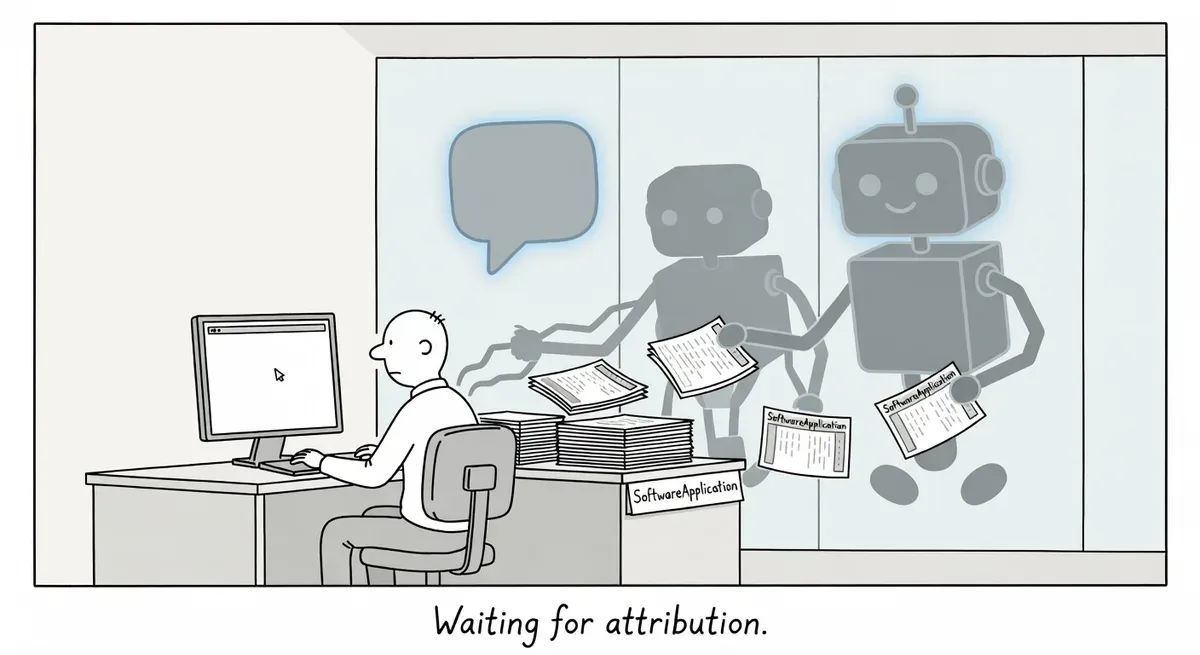
- SoftwareApplication schema with current pricing on product pages
- Glossary and comparison pages using HTML tables rather than images
- Conversation-led page structure that answers multi-part prompts
- Off-site expert quotes anchored to data
- Monthly citation monitoring tied to an ROI model
The SoftwareApplication schema point is worth attention. Google’s structured data documentation supports this type for rich results, and the schema.org spec includes properties for pricing tiers via nested Offer markup. SaaS companies that already run Product schema on their pricing pages may need to evaluate whether SoftwareApplication is a better fit. AI systems parse software-specific attributes like applicationCategory, featureList, and operatingSystem more reliably when the schema type matches.
Semrush also flags that mature SaaS categories with abundant third-party coverage (review sites, comparison guides, analyst content) tend to show up more reliably in AI summaries. Brands in emerging or niche segments face a harder path because there’s less corroborating content for AI systems to cross-reference.
What to do
Run the citation audit first. Test 8–12 realistic prompts across ChatGPT, Perplexity, and Google AI Overviews. Focus on category-level queries, not branded ones. Log whether your brand appears, where it ranks in the answer, whether details are accurate or outdated, and whether clickable source links are included. Semrush suggests timeboxing the manual audit at 30–45 minutes.
Check your product page structure. AI systems extract information more cleanly from pages with consistent naming, scoped URLs, and up-to-date specs. If your pricing page uses images instead of HTML tables, AI crawlers can’t parse the tiers. The same applies to feature comparison matrices embedded as screenshots.
Add SoftwareApplication schema to product pages. Include current pricing using nested Offer properties. If you’re already running Product or WebApplication schema, compare the property coverage against what SoftwareApplication supports. The featureList, applicationCategory, and operatingSystem fields give AI systems structured attributes to pull from.
Build comparison and glossary pages with extractable markup. HTML tables with clear headers beat prose-heavy paragraphs for AI extraction. If you have “vs.” comparison pages, structure them so each product’s attributes sit in labeled table cells.
Set up monthly citation monitoring. The playbook recommends tracking average citations per week, accuracy of brand mentions, and share of voice against competitors. Semrush points to its own AI Visibility Toolkit (drawing on 261M+ prompts) for benchmarking, but the manual audit method works as a starting point regardless of tooling.
Watch out for
Image-based pricing tables block AI extraction. If your pricing page renders tiers as designed graphics or screenshots rather than HTML, AI crawlers can’t read the values. Check whether your pricing data exists in the DOM (the page’s underlying code structure) as readable text in the page code.
Branded query audits give false confidence. Semrush specifically warns against relying on branded prompts when assessing AI visibility. Category-level prompts like “best project management tools for startups” reveal whether you’re in the consideration set. Branded queries only confirm AI knows you exist.